My Child Wants to Quit Their Main Extracurricular Activity. Will It Hurt Their College Application?
Parents often ask whether quitting a long-term extracurricular activity before high school graduation will hurt their child's college application. It is an understandable concern, but I believe it starts with the wrong question.
Before asking whether quitting will affect college admissions, I encourage families to first ask something much more important:
Why does the student want to quit?
The answer often tells us far more than the decision itself.
Some students discover a new passion that deserves greater attention. Some are genuinely exhausted after years of commitment. Others believe they have already accomplished everything the activity could offer. Some simply compare themselves to classmates who seem to have more free time and begin questioning whether the sacrifice is worth it.
These situations are very different, and they deserve different conversations.
What concerns me most is not whether a student decides to stop an activity. It is whether they understand the value they have already built.
Extracurricular activities are far more than additions to a college application. They provide learning experiences that classrooms are often not designed to teach.
Students certainly develop technical skills, but they also learn how to communicate with adults, solve problems, lead others, handle setbacks, make decisions under pressure, and accept responsibility.
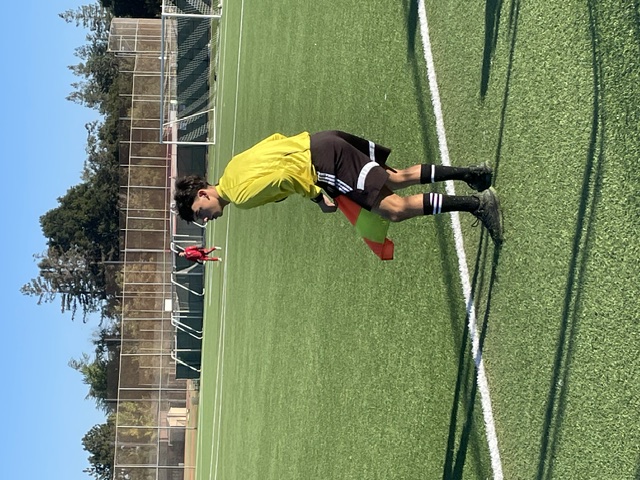
One of the students we worked with was a 17-year-old competitive soccer player who, after years of playing the game, earned his referee certification and began officiating youth matches.
Becoming a referee was not simply another extracurricular activity. It was an opportunity created by years of developing competence as a player.
As a referee, he contributed to the development of younger players by helping create a fair, safe, and respectful environment. He encouraged respect for teammates, opponents, coaches, referees, and the game itself while making difficult decisions under pressure and managing interactions with adults.
One example stands out. During a youth match he was officiating as a center referee, a coach repeatedly directed disrespectful comments toward the assistant referees. Rather than ignore the situation or respond emotionally, he approached the coach during the game and respectfully explained that the behavior toward the assistant referees was inappropriate and needed to stop.
That moment was the visible evidence of something much deeper: years of competence applied through an opportunity to serve others.
Now imagine a different scenario. What if he had decided to stop playing soccer during high school? He might still have developed enough technical ability to qualify as a referee. But by stepping away from the game, he may never have chosen to officiate.
The opportunity to help create a safe, fair, and respectful environment for younger players might never have existed. The opportunity to model sportsmanship, support player development, and encourage respect for teammates, opponents, coaches, and referees would have been lost. Officiating also allowed him to continue developing his understanding of the game from an entirely different perspective. Every match required him to interpret the Laws of the Game, anticipate play, make difficult decisions, and manage interactions among players, coaches, and spectators. Those experiences continued strengthening his judgment while allowing him to contribute to the next generation of players.
This student's experience illustrates an important principle. Competence is one of the most valuable assets a student can develop because it creates opportunities to contribute in new and meaningful ways.
Those opportunities may include leadership roles, teaching, mentoring, research, creative projects, entrepreneurship, community service, or entirely new experiences that would not have been possible without the underlying competence.
And it is through those opportunities that students create impact.
In other words:
Competence creates opportunities. Opportunities make impact possible. Impact becomes the visible evidence of competence.
This is where many students make an important mistake.
They assume that once they have reached a certain level - earned an advanced music certificate, played soccer for ten years, or achieved a particular milestone - the activity has fulfilled its purpose.
I don't believe that is the end of the story.
The purpose of developing competence is not simply to become good at something.
The purpose is to continue using that competence to create opportunities and meaningful impact.
Imagine two students who both stop taking weekly piano lessons after tenth grade.
The first simply stops playing.
The second begins composing original music, learns music production software, publishes pieces on Spotify, collaborates with other musicians, or writes music for school performances.
Both students developed the same musical competence.
Only one continues allowing that competence to create new opportunities and new impact.
This is why I believe competence behaves much like any valuable asset.
It can appreciate when it continues creating opportunities.
Or it can gradually depreciate when it is no longer maintained or applied.
Notice that I did not say disappear.
A student who studied piano for ten years does not suddenly become a beginner because they stop taking lessons. A soccer player who leaves the sport does not forget everything they learned overnight.
The competence remains.
But like a language that is no longer spoken or an instrument that is no longer practiced, it gradually becomes less refined. More importantly, it gradually loses its ability to create new opportunities.
This also matters in college admissions.
Admissions officers are not simply evaluating whether a student participated in an activity.
They are looking for evidence of competence.
That evidence often appears through the impact students have created.
Parents worry that colleges will simply notice a student stopped participating in an activity. In reality, admissions officers evaluate the story behind a student's experiences. If the competence developed through one activity continues creating opportunities, leadership, and meaningful impact elsewhere, the story continues - even if the original activity does not.
The activity itself is not the goal. The real value lies in what students do with the competence they develop. It is that competence, applied through new opportunities, that creates meaningful impact.
This is why, when families ask me whether their child should quit an activity, I rarely answer the question directly.
Instead, I ask four different questions:
• Why does your child want to stop?
• What competence has already been built?
• What opportunities can that competence still create?
• How can your child continue using that competence to make an impact?
Sometimes one chapter comes to an end. But that should not be the end of the competence developed during that chapter.
The question is not whether the activity continues.
The question is whether the competence continues creating opportunities and impact long after the original activity has ended.
Every Student's Path Is Different
Thoughtful planning helps students make the most of their high school years. If you're looking for a personalized approach to college planning, we'd love to learn more about your family's goals.
Schedule an Introductory Call With Us